Traditional woodworking has a distinctive appeal in a world where many products are designed, manufactured, and assembled with increasingly automated processes. Working with wood by hand offers a different kind of experience. It requires attention, patience, technique, and an understanding of how materials respond to tools.
For someone interested in getting started with hand-tool woodworking, however, the number of available tools and techniques can quickly become confusing. Hand planes, chisels, saws, marking tools, sharpening equipment, workbenches, and joinery methods all have their own learning curves. Buying a collection of tools does not automatically create woodworking skill.
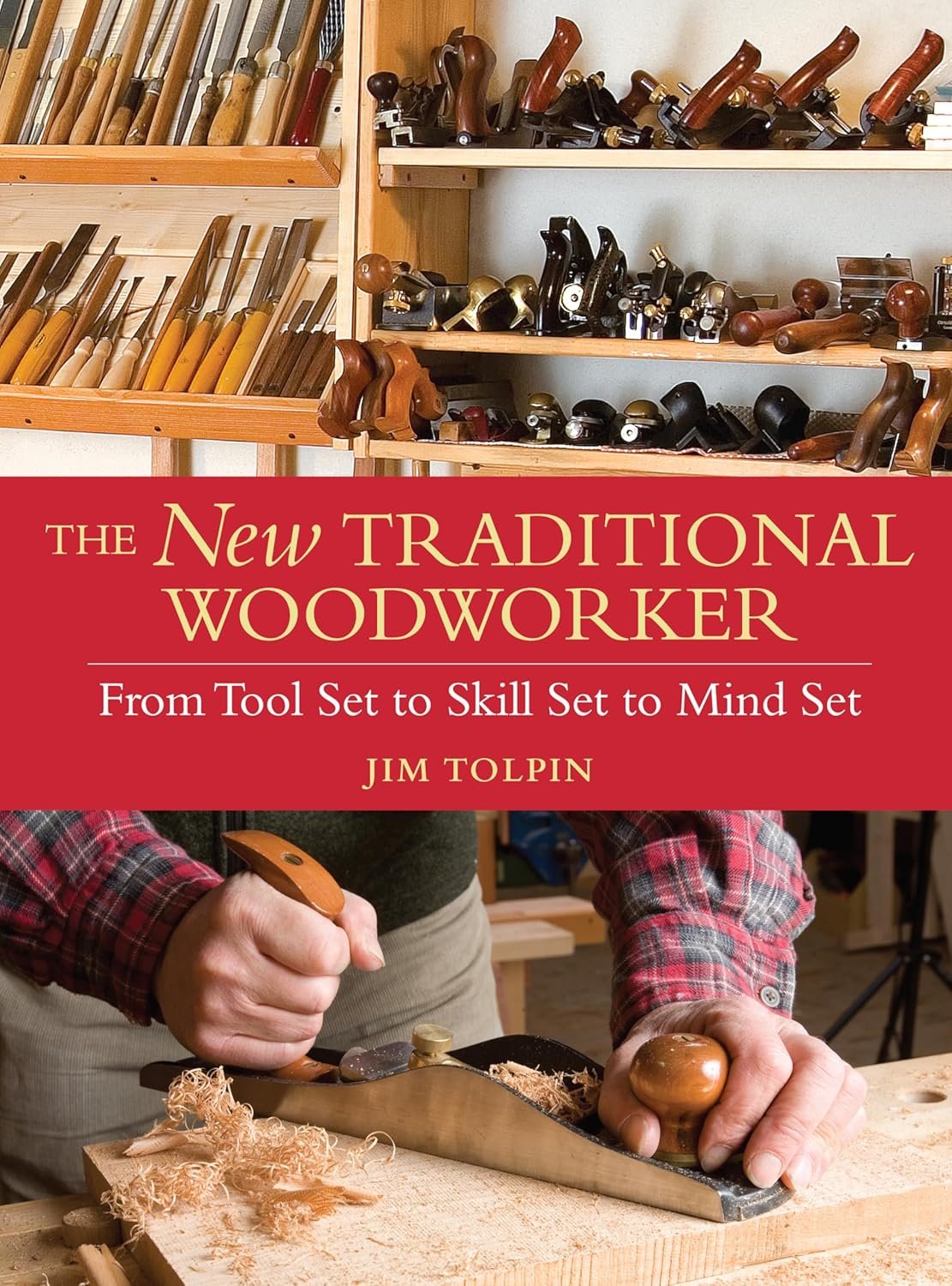
That idea is central to The New Traditional Woodworker: From Tool Set to Skill Set to Mind Set, a woodworking book associated with Popular Woodworking. Rather than treating traditional woodworking as simply a matter of collecting old-fashioned tools, the book focuses on the broader development of a woodworker, including tools, practical skills, and the mindset required to work effectively with hand tools.
This makes the subject relevant not only to complete beginners but also to woodworkers who want to understand traditional techniques more systematically.
This guide explores the ideas behind traditional hand-tool woodworking, the role of a suitable tool set, the skills that need to be developed, ways a woodworking book can be used as a learning resource, and important considerations before investing time and money into this style of woodworking.
What Is Traditional Woodworking?
Traditional woodworking generally refers to methods that rely heavily on hand tools and techniques developed before modern power tools became widespread.
This can include tools such as:
- Hand saws
- Chisels
- Hand planes
- Marking gauges
- Squares
- Brace and bits
- Scrapers
- Files
- Sharpening stones
Traditional woodworking does not necessarily mean avoiding every modern tool. Many contemporary woodworkers combine hand tools with power tools depending on the project.
The distinction is often more about how the work is approached.
A hand-tool woodworker needs to understand the behavior of the material and the relationship between the tool’s cutting edge, the workpiece, and the user’s technique.
For example, a hand plane can remove material and create a smooth surface, but the result depends on blade sharpness, blade projection, plane setup, grain direction, body position, and the way the tool is pushed across the wood.
The tool is only part of the equation.
From Tool Set to Skill Set to Mindset
The title of this book highlights three connected stages: tool set, skill set, and mindset.
This distinction is useful because beginners can sometimes assume that acquiring high-quality tools is the main challenge.
In reality, tools provide capability, but skills determine how effectively they are used.
Mindset influences how those skills develop.
Tool Set
The tool set includes the physical equipment used to perform woodworking operations.
A beginner may need surprisingly few tools to start learning basic hand-tool techniques.
A carefully selected set might include a saw, a plane, chisels, marking tools, a mallet, and sharpening equipment.
The goal is not necessarily to own dozens of specialized tools.
Skill Set
The skill set consists of the techniques needed to use those tools effectively.
This includes:
- Measuring
- Marking
- Sawing
- Chiseling
- Planing
- Sharpening
- Joinery
- Workholding
- Surface preparation
- Reading grain direction
A person can own an excellent hand plane without knowing how to tune or sharpen it properly.
Developing the skill set is therefore more important than simply increasing the size of the tool collection.
Mindset
Mindset refers to the habits and attitudes that support woodworking.
Traditional hand-tool work often rewards patience.
If a cut is slightly inaccurate, rushing the next step can make the problem worse. A careful woodworker learns to inspect the work, understand what went wrong, and make controlled corrections.
This approach can be applied far beyond woodworking.
Key Features of the Book’s Approach
A book built around tools, skills, and mindset can provide a different learning experience from a project-only woodworking book.
Emphasis on Hand Tools
The book focuses on traditional woodworking methods and the tools associated with them.
This can help readers understand why certain tools exist and what tasks they are intended to perform.
Rather than viewing a tool as an isolated object, the learning process can connect the tool to a specific woodworking operation.
Skill Development
Another important aspect is the transition from owning tools to knowing how to use them.
This distinction matters because hand-tool woodworking often requires setup and maintenance.
A saw needs appropriate teeth and technique. A plane needs an adequately sharp blade and proper adjustment. Chisels need reliable cutting edges.
These skills develop through practice.
Mindset and Working Habits
The mental side of woodworking can be just as important as the physical side.
Working slowly enough to observe the material, checking measurements before cutting, and learning from mistakes are all useful habits.
A traditional woodworking approach can encourage deliberate work rather than rushing toward the finished object.
Practical Learning
Woodworking is a practical discipline. Reading about a technique is useful, but understanding generally improves when the reader applies the information to actual wood.
A book such as this can therefore function as a reference to consult before and during hands-on practice.
Building a Traditional Woodworking Tool Set
One of the first questions beginners ask is which tools they need.
The answer depends on the type of woodworking being planned.
A furniture maker may need a different collection from someone building small boxes or household objects.
Hand Saws
Saws are among the fundamental hand tools.
Different saws are designed for different types of cuts.
A crosscut saw is intended for cutting across wood fibers, while a rip saw is designed around cutting along the grain.
Specialized saws can also be used for joinery.
Understanding why saw teeth differ can help a beginner choose and use saws more effectively.
Hand Planes
Hand planes remove thin layers of wood and can be used for flattening, smoothing, jointing, and other operations.
Different plane designs serve different purposes.
A smoother is generally associated with producing a refined surface, while a longer plane can be useful when working toward flatness over a larger area.
The important point for beginners is that plane performance depends heavily on setup and sharpening.
Chisels
Chisels are versatile tools for removing small amounts of wood and refining joints.
They can be used for mortises, paring, chopping, trimming, and many other tasks.
A basic set of appropriately sized bench chisels can cover a wide range of work.
Marking Tools
Accurate marking is one of the foundations of woodworking.
Useful tools can include:
- Combination squares
- Marking gauges
- Pencils
- Knives
- Dividers
A precise mark provides a clear reference for cutting or chiseling.
Mallets
Wooden mallets are commonly used with chisels.
A mallet allows controlled force to be applied without striking a chisel handle with a harder metal hammer in situations where that could damage the tool.
Sharpening Equipment
Sharpening is one of the most important skills in traditional woodworking.
A dull cutting edge makes many tasks harder and can encourage excessive force.
Sharpening systems vary widely. Waterstones, oilstones, diamond plates, abrasive papers, and powered systems are all used by different woodworkers.
The specific method matters less than learning to create and maintain a reliable edge safely and consistently.
Why Sharp Tools Matter
A sharp tool is not simply more convenient.
In many woodworking operations, a properly sharpened cutting edge allows the woodworker to make controlled cuts with less unnecessary force.
A dull tool may require greater pressure, which can reduce control.
This is particularly important when working near hands and fingers.
Sharp tools still require caution, of course. A sharp chisel or plane blade can cause injury if handled carelessly.
Proper workholding, controlled movements, and appropriate tool storage remain essential.
Understanding Wood Grain
Traditional woodworking places considerable emphasis on understanding grain direction.
Wood is not a uniform material. Grain patterns, growth characteristics, knots, figure, density, and moisture can influence how a board behaves.
Planing in the wrong direction can produce tear-out, where pieces of wood break away below the intended surface.
Recognizing grain direction can help the woodworker select a more appropriate cutting direction.
This is one example of why hand-tool woodworking involves observation as much as physical technique.
Measuring and Marking Accurately
Accuracy begins before cutting.
A woodworker needs to understand dimensions, reference faces, layout lines, and repeatability.
A useful habit is to establish a reliable reference edge or face and measure from it consistently.
Marking with a knife rather than only a pencil can also create a more precise physical reference for certain joinery operations.
The specific technique depends on the project, but the principle is consistent: accurate layout makes accurate cutting easier.
Learning Basic Joinery
Joinery is the process of connecting pieces of wood.
Traditional woodworking includes a wide range of joints.
Butt Joints
A butt joint simply brings one piece against another.
It is easy to understand but may require additional reinforcement depending on the application.
Dovetail Joints
Dovetails are strongly associated with traditional furniture and box making.
They require accurate layout and careful cutting.
Learning dovetails can improve a woodworker’s understanding of grain direction, saw control, chiseling, and precision.
Mortise and Tenon
The mortise-and-tenon joint uses a projecting tenon that fits into a corresponding mortise.
It is widely associated with traditional furniture construction.
Producing a good mortise and tenon requires careful measurement and controlled material removal.
Half-Lap Joints
A half-lap joint removes material from each connecting piece so they overlap.
This can be useful for certain frames and structural applications.
Rabbet and Dado Joints
Rabbets and dados create recesses that allow components to fit together.
These joints can be produced with hand tools or power tools depending on the woodworker’s approach.
How the Book Can Be Used
A woodworking book does not need to be read once and then put aside.
It can serve several roles throughout the learning process.
As a Beginner’s Introduction
Someone completely new to hand-tool woodworking can use the material to understand the basic philosophy behind traditional methods.
This can help prevent the common mistake of purchasing many tools before understanding what they are actually used for.
As a Tool Reference
When considering a new tool, readers can use a woodworking reference to understand its purpose and whether it fits their current projects.
This can encourage more deliberate purchasing.
During Practice
Keep the book nearby when practicing techniques.
Read the relevant section before starting, then return to it when something does not behave as expected.
As a Project Companion
Traditional woodworking projects involve multiple skills.
A project may require measuring, marking, sawing, planing, chiseling, sharpening, and finishing.
A general woodworking guide can help connect these individual skills.
For Long-Term Skill Development
Hand-tool woodworking is not a skill that needs to be mastered in a weekend.
The book can be revisited as the reader progresses.
A beginner may initially understand only the basic concepts. After several projects, the same explanations can become more meaningful because the reader has gained practical context.
Who May Find This Book Useful?
Complete Beginners
People starting traditional woodworking may benefit from understanding the relationship between tools and techniques before assembling a workshop.
Hobby Woodworkers
Existing hobbyists who primarily use power tools may find traditional hand-tool techniques interesting as an additional skill set.
Furniture Makers
Furniture projects often involve precision joinery and surface preparation, areas where hand tools remain useful.
DIY Enthusiasts
DIY hobbyists interested in building household objects can incorporate traditional techniques into their projects.
Woodworking Students
Someone taking a woodworking course or learning independently can use a general reference as supplementary material.
Experienced Woodworkers
More experienced woodworkers may use the book as a reference or as a way to revisit fundamentals.
Important Things to Consider Before Starting Traditional Woodworking
Traditional woodworking is rewarding for many people, but it requires realistic expectations.
Skill Takes Time
Owning a complete tool set does not eliminate the learning curve.
Sawing accurately, sharpening properly, planing surfaces, and cutting joinery all require practice.
Tool Quality Is Not the Same as Skill
A more expensive tool may provide useful advantages, but it cannot replace technique.
Beginners should generally focus on learning how to use and maintain a manageable set of tools rather than continuously upgrading equipment.
Used Tools Can Require Restoration
Traditional woodworking tools are often available secondhand.
Older planes, saws, and chisels can sometimes be restored and used effectively.
However, restoration may require additional knowledge and time.
A tool that looks inexpensive at first can require cleaning, sharpening, flattening, replacement parts, or other work.
Workholding Matters
A stable workpiece is essential.
Traditional woodworking benches often include vises and other systems designed to secure boards during cutting and planing.
A poorly secured piece can move unexpectedly and make accurate work more difficult.
Safety Should Be Part of the Technique
Woodworking involves sharp tools and potentially heavy materials.
Eye protection may be appropriate for certain operations. Dust protection can also be important depending on the task and environment.
Tools should be handled deliberately, stored safely, and kept in appropriate condition.
Traditional Woodworking vs. Power Tool Woodworking
Traditional and modern woodworking are not necessarily opposing philosophies.
Power tools can remove material quickly and efficiently.
Table saws, routers, circular saws, drills, planers, and other equipment can significantly increase production speed.
Hand tools, meanwhile, provide precision and control for many tasks.
A woodworker may use a power tool to rough-cut a component and a hand plane to refine the final surface.
This hybrid approach is common in modern workshops.
The choice depends on the project, workspace, available equipment, noise considerations, and personal preference.
Hand Tools vs. Power Tools for Beginners
Power tools can appear faster, but they also introduce their own learning requirements.
A table saw, for example, requires understanding blade selection, fence alignment, kickback risks, workpiece control, and safe feeding techniques.
Hand tools involve different challenges, such as sharpening, body mechanics, grain direction, and controlled cutting.
Neither approach is automatically easier.
A beginner should choose equipment based on the type of work planned and the environment available.
Traditional Woodworking vs. CNC and Digital Fabrication
Digital fabrication represents another end of the woodworking spectrum.
CNC routers can produce highly repeatable cuts from digital designs.
This is useful for production work and complex shapes.
Traditional hand-tool woodworking relies much more heavily on direct interaction with the material.
The two approaches can even complement one another.
A CNC machine might produce a rough component, while hand tools refine edges and surfaces.
Understanding traditional woodworking can also give digital fabrication users a stronger appreciation of how wood behaves physically.
Developing a Woodworking Mindset
The mindset aspect of traditional woodworking deserves special attention.
Slow Down Before Cutting
A common woodworking principle is that cutting material is irreversible.
A measurement can be checked again. A pencil mark can be moved. Once wood has been cut away, however, replacing it is much more complicated.
Taking a moment to verify dimensions can prevent unnecessary mistakes.
Learn From Mistakes
Errors are part of learning woodworking.
A crooked saw cut, tear-out, poorly fitting joint, or uneven surface can reveal something about technique.
Instead of simply discarding the mistake, examine what caused it.
That process gradually builds practical judgment.
Work With the Material
Wood has natural characteristics.
Instead of forcing a tool through difficult grain, experienced woodworkers often adjust the approach.
Changing the cutting direction, sharpening the tool, reducing the depth of cut, or supporting the workpiece differently can improve control.
Develop Patience
Traditional woodworking rewards repeated practice.
The first dovetail may not look like the tenth.
The first attempt at sharpening may take longer than expected.
Progress comes from repetition and adjustment.
Setting Up a Small Hand-Tool Workshop
A large workshop is not required to begin learning.
A basic setup may include:
- A sturdy work surface
- Bench vise or appropriate workholding system
- Hand saw
- Bench plane
- Chisels
- Combination square
- Marking tool
- Mallet
- Sharpening equipment
- Clamps
- Appropriate safety equipment
The exact setup depends on the projects being built.
A small workshop can be effective if tools are organized and the work surface is stable.
Maintaining Woodworking Tools
Tool maintenance is part of traditional woodworking.
Clean Tools Regularly
Remove dust, resin, and debris after use.
Metal surfaces may require appropriate protection against corrosion, particularly in humid environments.
Maintain Cutting Edges
Chisels, plane irons, and other cutting tools should be sharpened when necessary.
Waiting until a tool becomes extremely dull can make the sharpening process more frustrating.
Store Tools Safely
Protect cutting edges from unnecessary contact with other tools.
A dedicated toolbox, rack, or cabinet can reduce accidental damage.
Inspect Tools Before Use
Check handles, blades, screws, and other components before beginning a project.
Damaged equipment should be repaired or replaced as appropriate.
Choosing Wood for Practice
Beginners can benefit from selecting wood that is relatively predictable.
Softwoods can sometimes be accessible for practice, although their behavior differs from hardwoods.
Hardwoods such as maple, oak, cherry, and walnut are frequently used in furniture making but can require more effort to cut and plane.
The ideal practice material depends on the skill being developed.
For example, a beginner practicing dovetails may want a wood that provides a clear visual distinction between the joint components.
Common Beginner Mistakes
Traditional woodworking involves several recurring beginner challenges.
One is buying too many tools too early.
Another is neglecting sharpening.
A dull tool makes almost every hand-tool operation more difficult.
Poor workholding is another common issue.
If the board moves during a cut, accurate results become much harder to achieve.
Beginners may also rush measurements.
Taking extra time during layout can save considerably more time later.
Finally, some people focus too heavily on the appearance of the finished project and not enough on the process used to make it.
Skill development is the more valuable long-term objective.
Frequently Asked Questions
What is The New Traditional Woodworker about?
The book focuses on developing a traditional woodworking practice through an understanding of tools, practical skills, and the mindset needed to use hand tools effectively.
Is the book suitable for beginners?
Its focus on moving from a tool set to a skill set makes it relevant to people learning traditional woodworking, including those who are beginning to work with hand tools.
Does traditional woodworking require many tools?
No. A relatively small collection of versatile hand tools can support many basic woodworking operations. The ideal collection depends on the projects being built.
Are expensive tools necessary?
Expensive tools are not a substitute for skill. Beginners can often learn fundamental techniques using a carefully selected set of functional tools.
Why is sharpening so important?
Sharp cutting edges improve control and reduce the need for excessive force. Sharpening is therefore a fundamental part of hand-tool woodworking.
Can traditional woodworking be combined with power tools?
Yes. Many contemporary woodworkers combine hand tools and power tools depending on the task.
What should a beginner learn first?
Basic safety, workholding, measuring, marking, sawing, sharpening, and planing are useful foundations.
Is woodworking dangerous?
Woodworking involves sharp tools, machinery, dust, and heavy materials, so appropriate safety practices are important. Learning correct techniques and using suitable protective equipment can help reduce risk.
What is workholding?
Workholding refers to methods used to secure a piece of wood while it is being cut, planed, drilled, or otherwise worked.
Why does wood grain matter?
Grain direction affects how tools cut the material. Understanding grain can help reduce tear-out and improve surface quality.
What is tear-out?
Tear-out occurs when wood fibers break away below the intended cutting surface, often when a cutting tool moves against unfavorable grain direction.
What are traditional woodworking joints?
Traditional joinery includes techniques such as dovetails, mortise and tenon, rabbets, dados, and various lap joints.
Can beginners make furniture with hand tools?
Yes, although furniture projects can require significant accuracy and multiple woodworking skills. Starting with smaller projects can make the learning process more manageable.
How long does it take to learn hand-tool woodworking?
There is no universal timeline. Basic techniques can be introduced relatively quickly, but developing consistent accuracy and efficiency requires ongoing practice.
Are vintage woodworking tools still useful?
Many older hand tools can remain functional, although their condition varies. Used tools may require cleaning, sharpening, adjustment, or restoration.
Do I need a large workshop?
No. A compact workspace can support many hand-tool projects as long as there is a stable work surface and sufficient room to work safely.
What type of wood is good for practice?
The appropriate material depends on the skill being practiced. Beginners may experiment with accessible softwoods or manageable hardwoods before moving into more demanding materials.
Can traditional woodworking be environmentally friendly?
Hand-tool woodworking can involve relatively little electricity during certain operations, but environmental impact depends on factors such as wood sourcing, tool manufacturing, finishes, waste, and workshop practices.
Should beginners buy a complete tool set?
Not necessarily. Building a tool collection gradually based on actual projects can prevent unnecessary purchases and encourage a better understanding of each tool’s purpose.
Why is mindset important in woodworking?
Patience, attention to detail, willingness to learn from mistakes, and careful observation all contribute to developing reliable woodworking skills.
Can a woodworking book replace practical instruction?
A book can provide valuable explanations and reference material, but hands-on practice and, when available, instruction from an experienced woodworker can add practical context.
What makes hand-tool woodworking different?
Hand tools create a direct connection between the woodworker and the material. The user controls the cutting action and often receives immediate feedback from the wood.
Final Thoughts
Traditional woodworking is ultimately about much more than owning a collection of hand tools. The tools provide the means to work with wood, but the ability to use them effectively comes from developing practical skills, understanding materials, maintaining equipment, and learning to approach each task carefully.
The New Traditional Woodworker: From Tool Set to Skill Set to Mind Set addresses this broader perspective by connecting equipment with technique and the habits that support long-term development.
For beginners, this approach can help put tool purchasing into context. Instead of viewing woodworking as a race to accumulate planes, saws, chisels, and accessories, the focus can remain on learning what each tool does and practicing the skills that make it useful.
For experienced hobbyists, the emphasis on traditional techniques can provide another way to approach familiar projects. Hand tools can complement power tools rather than compete with them, offering precision and control during many stages of furniture and small-project construction.
The most important lesson is that woodworking skill develops gradually. Accurate measuring, controlled sawing, effective sharpening, careful planing, reliable joinery, and good workholding all become more natural through repeated practice.
A thoughtful woodworking reference can support that process by providing information to return to as new challenges appear. Combined with hands-on practice and sensible safety habits, traditional woodworking can become a long-term craft rather than simply another DIY activity.
For anyone interested in learning more about the relationship between woodworking tools, practical skills, and the mindset behind traditional hand-tool work, The New Traditional Woodworker offers a focused resource for exploring that approach.
Leave a Reply