Bread is one of the oldest and most adaptable foods prepared in home kitchens. Across different generations, families have developed their own approaches to mixing dough, shaping loaves, working with yeast, and baking bread for everyday meals. Some recipes became household standards, while others gradually disappeared as commercial bread became more convenient.
Vintage bread recipes offer a way to rediscover some of those older baking traditions.
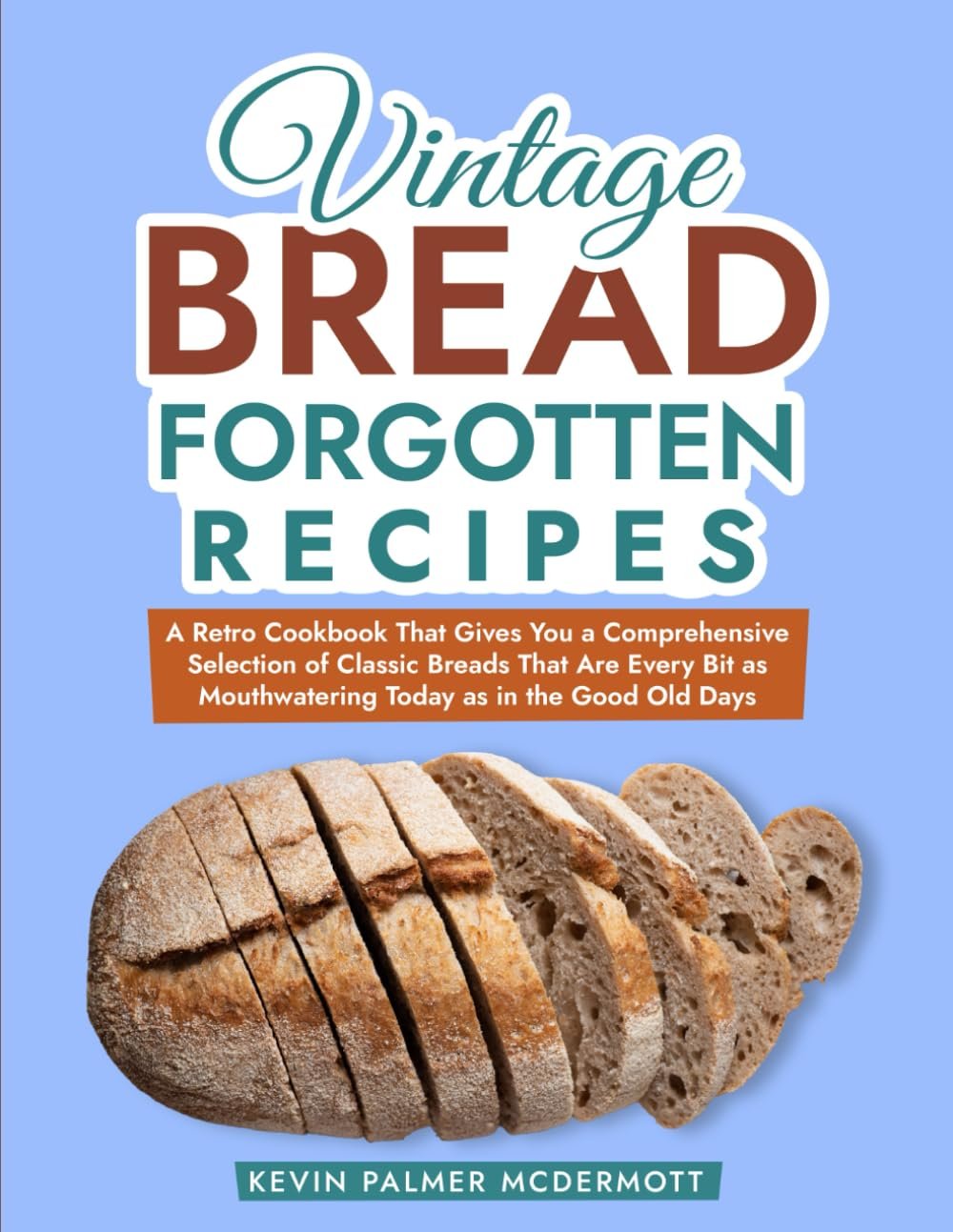
Vintage Bread Forgotten Recipes: A Retro Cookbook That Gives You a Comprehensive Selection of Classic Breads That Are Every Bit as Mouthwatering Today, part of the Vintage and Retro Cookbooks collection, focuses on classic bread recipes associated with traditional home baking. A cookbook built around forgotten and retro breads can serve as a source of inspiration for people who want to explore older recipes, understand traditional baking methods, and bring more homemade bread into their kitchens.
Traditional bread baking can seem intimidating at first. Dough temperature, yeast activity, hydration, kneading, proofing, shaping, and oven conditions all influence the finished loaf. Older recipes can also use terminology or measurements that are less familiar to today’s home bakers.
With the right approach, however, vintage bread recipes can become an interesting way to learn fundamental baking skills while exploring the history and variety of homemade bread.
This guide looks at what a vintage bread cookbook can offer, how traditional bread recipes can be incorporated into modern kitchens, the techniques worth understanding, and the practical factors to consider when working with older baking instructions.
What Makes a Bread Recipe Vintage?
A vintage bread recipe is generally associated with an earlier period of home baking.
The word does not necessarily refer to one specific decade. Instead, vintage recipes can come from older family collections, community cookbooks, newspapers, magazines, handwritten recipe cards, and traditional baking books.
These recipes often reflect the ingredients and equipment that were readily available at the time.
Before modern bread machines and highly automated kitchen appliances became common, many households prepared bread using basic bowls, wooden spoons, measuring tools, hands, and conventional ovens.
That history can be seen in the instructions.
Some recipes may provide relatively simple directions because the original audience was expected to understand basic baking techniques. Others may use measurements or terminology that modern bakers need to interpret.
This is part of the appeal of vintage baking. Preparing an older bread recipe can become both a cooking activity and an opportunity to understand how home baking developed over time.
Key Features of a Vintage Bread Cookbook
A cookbook centered on forgotten bread recipes can provide several useful functions for today’s home baker.
A Broad Collection of Classic Breads
The cookbook is presented as offering a comprehensive selection of classic bread recipes.
A broad collection allows readers to explore different types of bread instead of relying on one basic loaf.
Bread can vary considerably in texture, shape, ingredients, preparation method, and intended use.
Some recipes may be appropriate for everyday sandwiches, while others may be better suited to breakfast, dinner, celebrations, or special occasions.
Focus on Forgotten Recipes
The emphasis on forgotten recipes provides a different source of inspiration from contemporary baking collections.
Some traditional recipes have remained popular for generations, while others have become less familiar.
A dedicated vintage cookbook can help bring those less commonly encountered recipes back into consideration.
For curious bakers, this can be one of the most interesting aspects of traditional recipe collections.
Retro Cooking Inspiration
Vintage bread recipes can also support themed cooking projects.
A retro dinner, family baking day, holiday gathering, or nostalgic meal can provide an opportunity to prepare traditional breads alongside other classic dishes.
The recipes can also be used simply as everyday baking ideas.
There is no requirement to recreate an entire historical meal to appreciate an older bread recipe.
Traditional Baking Techniques
Bread baking involves several fundamental techniques.
A vintage recipe collection can encourage readers to practice:
- Mixing
- Kneading
- Fermentation
- Proofing
- Shaping
- Scoring
- Baking
- Cooling
These skills remain relevant even when modern equipment is used.
Why Forgotten Bread Recipes Are Still Relevant
Commercial bread has made everyday food preparation considerably more convenient, but homemade bread offers a different experience.
Baking bread from scratch allows the cook to control ingredients, shape, size, texture, and preparation methods.
Vintage recipes can add another dimension by introducing techniques and flavor combinations that may not be common in everyday supermarket bread.
Traditional recipes can also provide a useful reminder that bread does not have to follow a single formula.
Different combinations of flour, liquid, fat, sweeteners, seeds, spices, and other ingredients can produce very different results.
This variety makes bread baking an excellent area for experimentation.
Understanding the Basic Components of Bread
Before working through vintage recipes, it helps to understand what the major ingredients do.
Flour
Flour provides the primary structure of most bread doughs.
Wheat flour contains proteins that can form gluten when combined with water and worked through mixing or kneading.
Different flours behave differently.
Bread flour often contains more protein than many all-purpose flours, while whole-grain flours contain more of the grain components beyond the refined endosperm.
The type of flour can therefore influence dough behavior and finished texture.
Water or Other Liquids
Water hydrates flour and allows the dough’s structure to develop.
Milk, buttermilk, and other liquids may also be used in particular recipes.
Liquid temperature is especially important when working with yeast.
Yeast
Yeast is responsible for fermentation in many traditional breads.
It consumes available sugars and produces carbon dioxide, which helps the dough expand.
Yeast performance depends on factors such as temperature, moisture, and the condition of the yeast.
Salt
Salt contributes flavor and also affects dough development and fermentation.
Because salt plays a functional role, changing its quantity substantially can affect the recipe beyond simply changing how salty the bread tastes.
Sugar
Some bread recipes contain sugar, honey, molasses, or another sweetener.
These ingredients can contribute sweetness, browning, and other characteristics.
Not all breads require added sweeteners.
Fat
Butter, shortening, oil, or other fats can appear in certain bread recipes.
Fat can influence tenderness, flavor, and dough handling.
Different fats can produce different results, so substitutions should be considered carefully.
Understanding Yeast and Fermentation
Yeast breads can appear complicated until fermentation is understood.
Yeast needs appropriate conditions to become active.
Temperature is particularly important. Excessively hot liquid can damage yeast, while very cold conditions can slow fermentation.
That is why recipes often specify a liquid temperature range or provide visual instructions for determining whether yeast is active.
Fermentation time is not always fixed.
Room temperature, dough temperature, yeast activity, flour composition, and other factors can influence how quickly dough rises.
Instead of relying exclusively on the clock, bakers can learn to recognize visual changes in dough volume and texture.
Kneading and Dough Development
Kneading helps develop dough structure.
The process stretches and reorganizes gluten-forming proteins in wheat flour.
Traditional recipes may recommend kneading by hand for a specified amount of time, but the actual dough condition can be more informative than a strict number of minutes.
A properly developed dough may become smoother, more elastic, and easier to handle.
The amount of kneading needed depends on the recipe and flour.
Some breads intentionally use gentler mixing methods, while others require more intensive development.
First Rise and Proofing
Many yeast breads go through more than one period of fermentation.
The first rise, often called bulk fermentation, allows the dough to develop volume and flavor.
After that stage, the dough may be divided and shaped before a second rise.
The second rise allows the shaped dough to expand before baking.
Timing varies significantly depending on temperature and recipe design.
A kitchen that is cooler than the environment used to develop the original recipe may require additional time.
Shaping Traditional Bread
Bread shaping is both practical and visual.
A loaf can be shaped into a round, oval, rectangular, braided, or other form depending on the recipe.
Shaping affects how the dough expands during baking.
A well-shaped loaf generally needs enough surface tension to maintain its form while still allowing the dough to expand.
Beginners may find shaping easier after practicing with relatively simple loaf forms.
Scoring Bread
Some breads are scored before baking.
Scoring creates controlled openings in the dough’s surface.
As the bread expands in the oven, these cuts can help direct where expansion occurs.
A sharp blade or appropriate bread-scoring tool should be handled carefully.
The depth and pattern of scoring depend on the type of bread.
Baking Vintage Bread in a Modern Oven
One of the challenges of working with older recipes is that the original oven may have been very different from a contemporary appliance.
Modern ovens can provide more precise temperature settings, but actual oven temperatures can still vary.
An oven thermometer can help determine whether the oven is heating close to the displayed setting.
Baking time should also be treated as an estimate.
Bread size, dough temperature, oven performance, pan material, and other factors can affect how quickly a loaf bakes.
Visual indicators and internal temperature measurements can provide additional information.
How the Cookbook Can Be Used
A vintage bread cookbook can be used in several ways.
As a Beginner’s Introduction
New bakers can start with relatively straightforward bread recipes.
The goal should be learning the process rather than immediately attempting the most complicated loaf.
As a Source of Traditional Recipes
Experienced bakers can use the collection to explore breads they may not have encountered in modern cookbooks.
For Family Baking
Bread baking can become a shared kitchen activity.
Children can participate in appropriate supervised tasks such as measuring ingredients, mixing dough, shaping simple portions, or decorating finished bread.
Adults should handle hot ovens, baking trays, sharp tools, and other potentially hazardous equipment.
For Holiday Meals
Homemade bread can complement holiday dinners and special occasions.
Traditional recipes may provide a nostalgic element to a modern meal.
For Weekend Baking Projects
Some breads require substantial fermentation and preparation time.
Weekend baking can provide the flexibility needed for recipes that do not fit easily into a busy weekday schedule.
Types of Bread to Explore
A comprehensive collection may include different bread styles, each offering its own learning opportunity.
White Bread
Classic white bread is often approachable for beginners because its ingredients are relatively familiar.
It can be shaped into sandwich loaves, rolls, or other forms depending on the recipe.
Whole Wheat Bread
Whole wheat bread uses flour containing more of the wheat grain.
Whole-grain dough can behave differently from refined-flour dough and may require adjustments in hydration or technique depending on the recipe.
Dinner Rolls
Rolls provide an opportunity to practice dividing and shaping dough.
Because individual portions are smaller, they can also provide useful practice with portion consistency.
Sweet Breads
Some traditional breads contain sugar, butter, eggs, dried fruits, spices, or other ingredients.
These breads can blur the boundary between everyday bread and dessert-style baking.
Quick Breads
Not every traditional bread requires yeast.
Quick breads rely on chemical leaveners such as baking powder or baking soda.
These breads generally have a different texture and preparation process from yeast-leavened loaves.
Specialty and Regional Breads
Traditional baking varies across regions.
Regional breads can introduce different grains, shaping techniques, spices, seeds, and preparation methods.
This is one reason a broad vintage cookbook can be interesting for readers who want to explore baking beyond familiar supermarket styles.
Working With Older Measurements
Older recipes may use terminology that is less precise than modern baking instructions.
A recipe might refer to a cup, spoonful, pinch, handful, or other informal measurement.
When a measurement seems ambiguous, avoid guessing if the difference could substantially affect the recipe.
Reliable baking references can help interpret unfamiliar terminology.
For flour in particular, weighing ingredients can improve consistency when a dependable weight conversion is available.
Adjusting Vintage Recipes for Modern Ingredients
Ingredient availability changes over time.
A traditional recipe may call for a product that is no longer commonly stocked in modern grocery stores.
Before substituting, consider the ingredient’s role.
If it provides acidity, fat, moisture, sweetness, or structure, replacing it with something chemically different may alter the dough significantly.
Some substitutions are straightforward, while others require experimentation.
For best results, understand the original recipe before making major changes.
Who May Find a Vintage Bread Cookbook Useful?
Beginner Bakers
A traditional bread collection can provide a structured way to practice foundational techniques.
Experienced Home Bakers
Experienced cooks may enjoy discovering recipes that are less common in contemporary collections.
Fans of Traditional Cooking
People interested in old-fashioned cooking methods may appreciate the historical character of vintage bread recipes.
Families
Bread baking can become a shared activity and an opportunity to introduce children to basic food preparation under appropriate supervision.
Hosts and Entertainers
Homemade bread can complement meals for family gatherings, holidays, and dinner parties.
Recipe Collectors
People who enjoy collecting cookbooks may find vintage baking themes particularly appealing.
Important Things to Consider
Bread Requires Patience
Yeast dough often needs time to ferment and rise.
Even a recipe described as simple may involve several stages.
Your Kitchen Conditions Matter
Temperature and humidity can affect dough development.
A recipe developed in a warm kitchen may behave differently in a cooler environment.
Flour Can Vary
Different brands and types of flour can absorb different amounts of water.
This can affect dough consistency.
Don’t Rely Only on the Clock
Rise times are estimates.
Look at the dough itself and learn to recognize when it has expanded sufficiently.
Follow Food-Safety Practices
Raw dough can contain ingredients that require careful handling.
Wash hands and utensils appropriately and avoid consuming raw dough when ingredients such as uncooked flour or eggs are present.
Allow Bread to Cool
Fresh bread can continue changing internally after it comes out of the oven.
Cutting into a loaf immediately can make the crumb appear different from its final texture.
Allowing bread to cool according to the recipe can produce more predictable slicing and texture.
Vintage Bread Baking vs. Bread Machines
Bread machines automate much of the mixing, kneading, proofing, and baking process.
They can be convenient for people who want relatively hands-off bread preparation.
Traditional bread baking requires more direct involvement.
The baker controls the dough and observes how it develops.
A bread machine can still be useful for certain recipes, but not every traditional recipe will translate directly to machine baking.
The two approaches serve different purposes.
Vintage Bread Baking vs. Stand Mixer Baking
A stand mixer can reduce the physical effort involved in kneading.
This can be useful for larger batches or doughs that require substantial mixing.
Hand kneading, however, provides direct feedback about the dough’s texture and development.
Neither approach is inherently superior.
A baker can choose based on available equipment, batch size, physical comfort, and personal preference.
Vintage Bread Baking vs. Store-Bought Bread
Commercial bread provides convenience and consistency.
Homemade bread offers control over ingredients, preparation, shape, and timing.
Traditional recipes also provide an opportunity to learn about fermentation and dough handling.
The choice does not need to be either-or.
Many households use store-bought bread during busy periods and bake homemade bread when time allows.
Building Confidence With Bread Baking
Bread baking can feel intimidating because dough changes throughout the process.
The mixture may initially seem sticky, then become smoother as gluten develops.
During fermentation, the dough expands.
After shaping, it changes again.
Understanding these stages makes the process easier.
A useful strategy is to focus on one variable at a time.
For example, learn how hydration affects dough before experimenting with several different flours.
Once the basic process becomes familiar, more complex recipes become easier to understand.
Troubleshooting Common Bread Problems
Dense Loaf
A dense loaf can have several possible causes.
Yeast may have been inactive, the dough may have been under-proofed, the dough may have been handled incorrectly, or the recipe may have been altered.
Bread Does Not Rise
Temperature, yeast condition, and fermentation time are common factors.
Cold environments can significantly slow yeast activity.
Dough Is Too Sticky
Hydration, flour type, and measuring technique can all influence stickiness.
Adding large amounts of flour immediately may create a dense loaf.
It is often better to understand why the dough is sticky before making major adjustments.
Dough Is Too Dry
Too much flour or insufficient liquid can produce dry dough.
Flour measurement methods can contribute to this problem.
Uneven Crust
Oven temperature, loaf placement, pan material, and baking conditions can influence crust development.
Burned Exterior With Undercooked Interior
This can occur when the oven is too hot, the loaf is too large, or the baking conditions are not appropriate for the particular recipe.
Adjustments should be based on the specific recipe and equipment.
Practical Tips for Using Vintage Bread Recipes
Read the entire recipe before starting.
Measure ingredients carefully.
Prepare the workspace before beginning.
Check that yeast is active when the recipe requires it.
Pay attention to dough texture rather than relying exclusively on the clock.
Use a thermometer when appropriate.
Avoid unnecessary substitutions during the first attempt.
Take notes when experimenting.
Allow enough time for fermentation and cooling.
Most importantly, treat each loaf as an opportunity to learn how ingredients and technique interact.
Frequently Asked Questions
What is Vintage Bread Forgotten Recipes about?
It is a retro cookbook focused on a broad selection of traditional and less commonly encountered bread recipes.
Is the cookbook suitable for beginners?
The focus on classic breads can make it useful for beginners interested in learning traditional bread-baking techniques, although individual recipes may vary in complexity.
What makes a bread recipe “forgotten”?
A forgotten recipe is generally one that was once more familiar or commonly prepared but has become less prominent in modern kitchens.
Do vintage bread recipes require special equipment?
Not necessarily. Many traditional breads can be made using basic kitchen equipment, although modern mixers, scales, and thermometers can make certain tasks easier.
Can vintage bread recipes be made in a modern oven?
Yes. Traditional recipes can generally be adapted to modern ovens, but baking temperature and timing may require attention because ovens vary.
Do I need a stand mixer?
No. Many bread doughs can be mixed and kneaded by hand. A stand mixer is an optional tool that can reduce physical effort.
Can a bread machine be used?
Some recipes may be adaptable to a bread machine, but not every traditional recipe will work with an automated bread-machine cycle.
Why does yeast sometimes fail to make dough rise?
Yeast activity can be affected by temperature, age, moisture, and other conditions. Very hot liquid can damage yeast, while cold conditions can slow fermentation.
How long should bread dough rise?
There is no universal time. Fermentation depends on the recipe and environmental conditions. Dough appearance and volume can provide useful indicators.
Why is my dough sticky?
Dough stickiness can be influenced by hydration, flour type, measuring methods, and temperature. Adding flour should be done carefully because excessive flour can produce a dense result.
Why is my homemade bread dense?
Several factors can contribute, including insufficient fermentation, inactive yeast, excessive flour, inadequate dough development, or other recipe-specific issues.
Should I weigh flour?
Weighing flour can improve consistency when the recipe provides reliable weight measurements or when a trustworthy conversion is available.
Can I substitute ingredients?
Some substitutions are possible, but ingredients often serve specific structural or chemical functions. Major substitutions can change the final result.
Can I add seeds or nuts?
Many bread recipes can accommodate additions such as seeds or nuts, but the amount and timing should be appropriate for the dough.
Can children help with bread baking?
Yes, with suitable supervision. Children can help measure ingredients, mix dough, and perform simple shaping tasks while adults handle hot ovens and sharp equipment.
How should homemade bread be stored?
Storage depends on the type of bread and its ingredients. Allow bread to cool appropriately before storing and use suitable food-storage practices.
Why should bread cool before slicing?
Cooling allows the interior crumb to finish setting. Cutting too early can produce a texture that appears gummy or less developed.
Can vintage bread recipes be made healthier?
Recipes can sometimes be adapted, but changing ingredients can affect texture and structure. Nutritional changes should be considered alongside the recipe’s baking requirements.
Are whole-grain breads harder to make?
Whole-grain dough can behave differently from refined-flour dough. It may require different hydration and handling depending on the recipe.
What is the difference between yeast bread and quick bread?
Yeast bread relies on fermentation for leavening, while quick breads generally use chemical leaveners such as baking powder or baking soda.
Why does bread crack during baking?
Cracking can result from shaping, scoring, proofing, or the way dough expands in the oven. Controlled scoring is sometimes used to direct expansion.
Do I need to score every loaf?
No. Scoring is particularly associated with certain styles of bread. Whether it is appropriate depends on the recipe and loaf structure.
Can I freeze homemade bread?
Many breads can be frozen when packaged appropriately, although texture can vary depending on the recipe and storage method.
Can I use vintage recipes for holiday meals?
Yes. Traditional breads can complement holiday dinners, breakfasts, brunches, and other special occasions.
Are old bread recipes still relevant today?
They can be. Fundamental baking principles such as fermentation, dough development, shaping, and temperature management remain relevant even when modern equipment is used.
Final Thoughts
Traditional bread baking offers a direct connection to one of the oldest forms of home cooking. Long before automated appliances and highly standardized commercial products became commonplace, people developed recipes around the ingredients, tools, and cooking environments available to them.
Vintage Bread Forgotten Recipes: A Retro Cookbook That Gives You a Comprehensive Selection of Classic Breads That Are Every Bit as Mouthwatering Today provides a way to explore that tradition through a collection centered on classic and less commonly encountered breads.
For beginners, the recipes can provide opportunities to practice foundational techniques such as mixing, kneading, fermentation, shaping, and baking. For experienced bakers, they can introduce different approaches to familiar ingredients and encourage experimentation with traditional styles.
Working with vintage recipes does require some flexibility. Older instructions may use unfamiliar terminology, measurements may need interpretation, and modern ovens can behave differently from the equipment available when a recipe was originally created. Flour, yeast, room temperature, humidity, and other factors can also affect the outcome.
These differences are not necessarily obstacles. They are part of learning how bread behaves.
The most useful approach is to begin with manageable recipes, follow the original instructions carefully, and make changes gradually once the basic process is understood. Paying attention to dough texture, fermentation, oven temperature, and internal doneness can provide more useful information than relying solely on a fixed timeline.
A vintage bread cookbook can therefore serve more than one purpose. It can be a recipe collection, a source of culinary inspiration, a practical baking reference, and an introduction to traditional food preparation.
Whether you are interested in homemade sandwich bread, dinner rolls, whole-grain loaves, sweet breads, quick breads, or less familiar traditional recipes, exploring older baking methods can add variety to a modern kitchen while preserving an appreciation for the techniques that shaped home bread making.
Leave a Reply